Running accounts6 min read
Phone Farm vs Click Farm: What Is the Difference?
Written by Petr Kynčl
"Phone farm" and "click farm" are often used as if they meant the same thing. News stories about rooms full of phones usually say one and picture the other. They overlap, but they are not the same: a phone farm is a setup, a click farm is one use of it. The difference matters for what you build, what the platforms do about it and where the law starts to care.
The short version
- A phone farm is many phones operated by software: one account or one job per phone, automated so that no one has to tap each screen. What it does is up to whoever runs it.
- A click farm produces fake engagement: clicks, likes, follows, views, installs, ratings or reviews that look like interest from real people but are not. It can run on phones, on emulators, on computers, or on people paid to tap.
Every click farm that uses phones is a phone farm. Most phone farms are not click farms.
What a phone farm is
A phone farm is a group of Android phones, or cloud Android phones, each running its own app account, all controlled from one place. The phones can be handsets on a shelf, box phones packed twenty to a chassis, or devices rented in a data centre. Software on each phone does the work inside the real apps. For the full picture, see what a phone farm is.
What it is used for varies widely:
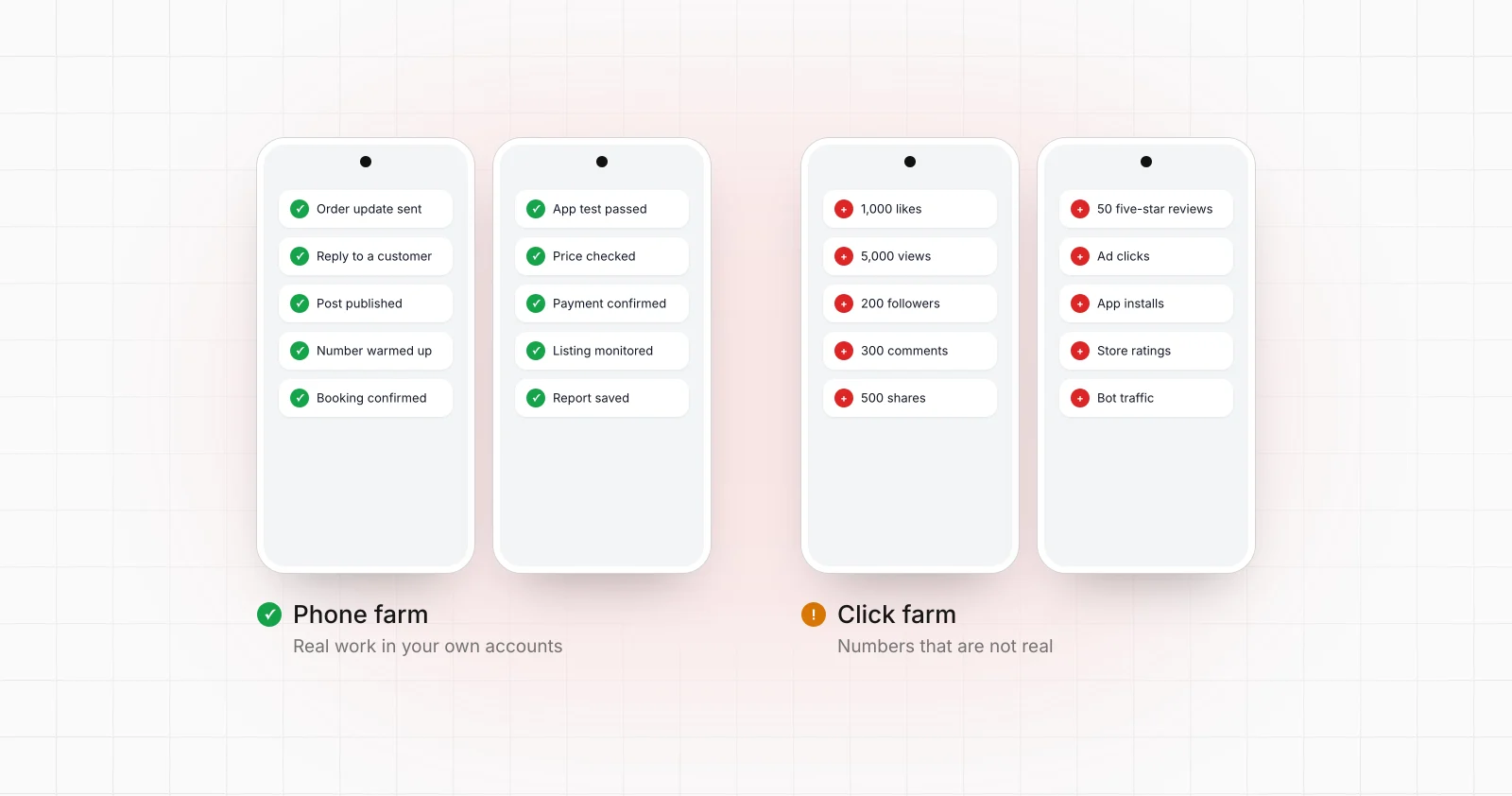
- Messaging from a business's own numbers: order updates, replies, reminders, sent on command from a backend.
- Running a business's own accounts on a schedule: posting, replying, keeping profiles active.
- App testing on real devices before a release.
- Apps with no API, such as payments or logistics apps, driven from a company's own systems.
- Monitoring: how prices, listings or ads look on real phones in different places.
None of these require deceiving anyone about whether a person is behind the activity in a way that harms a customer or an advertiser.
What a click farm is
A click farm exists to make numbers that are not real. Typical products:
- Followers, likes and views sold to make an account look more popular than it is.
- Fake reviews and ratings for apps, products or businesses.
- App installs and in-app activity to push an app up store rankings.
- Ad clicks and ad views that charge an advertiser for attention that never happened.
The older click farms were rooms of low-paid workers tapping phones by hand. Many now automate the tapping, which is why they look like phone farms in photos. The output is what defines them: engagement whose whole point is to misrepresent interest.
How to tell them apart
| Phone farm | Click farm | |
|---|---|---|
| What it is | Infrastructure: phones plus automation | A service: fake engagement |
| Typical accounts | The operator's or a client's own | Throwaway accounts, often in bulk |
| Typical output | Messages sent, posts published, tests run, data collected | Likes, follows, views, reviews, installs, ad clicks |
| Who benefits | The business running it | Whoever buys the numbers, at someone else's expense |
| Who loses | Usually no one | Advertisers, buyers misled by reviews, platforms, honest competitors |
| Legal risk | Depends on use, often low | High in many places |
A useful test: if the activity stopped being counted, would it still be worth doing? A message that reaches a customer, a post that people read or a test that catches a bug is worth doing whether or not anyone counts it. A like whose only value is the number it adds is not.
What platforms do about each
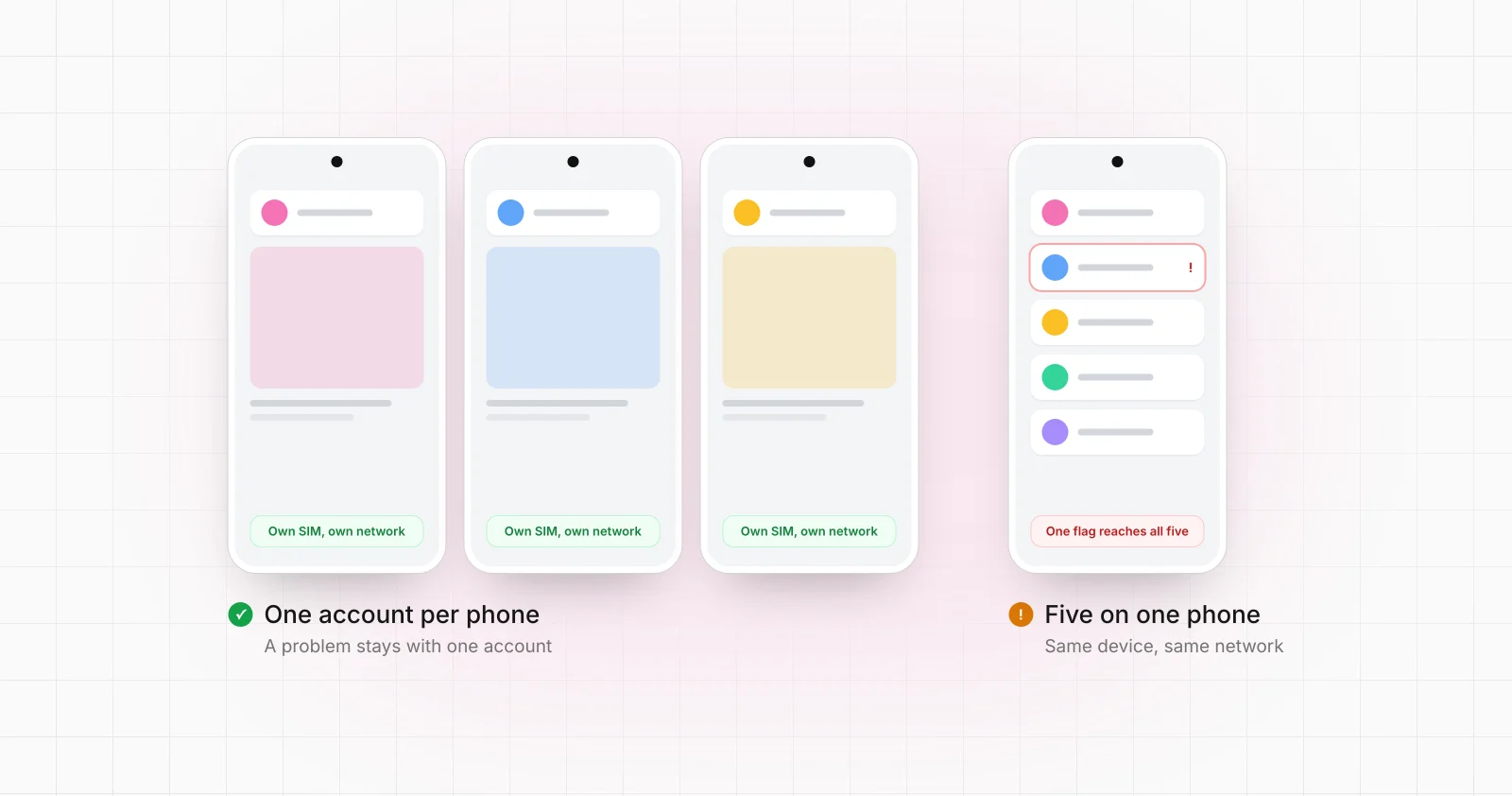
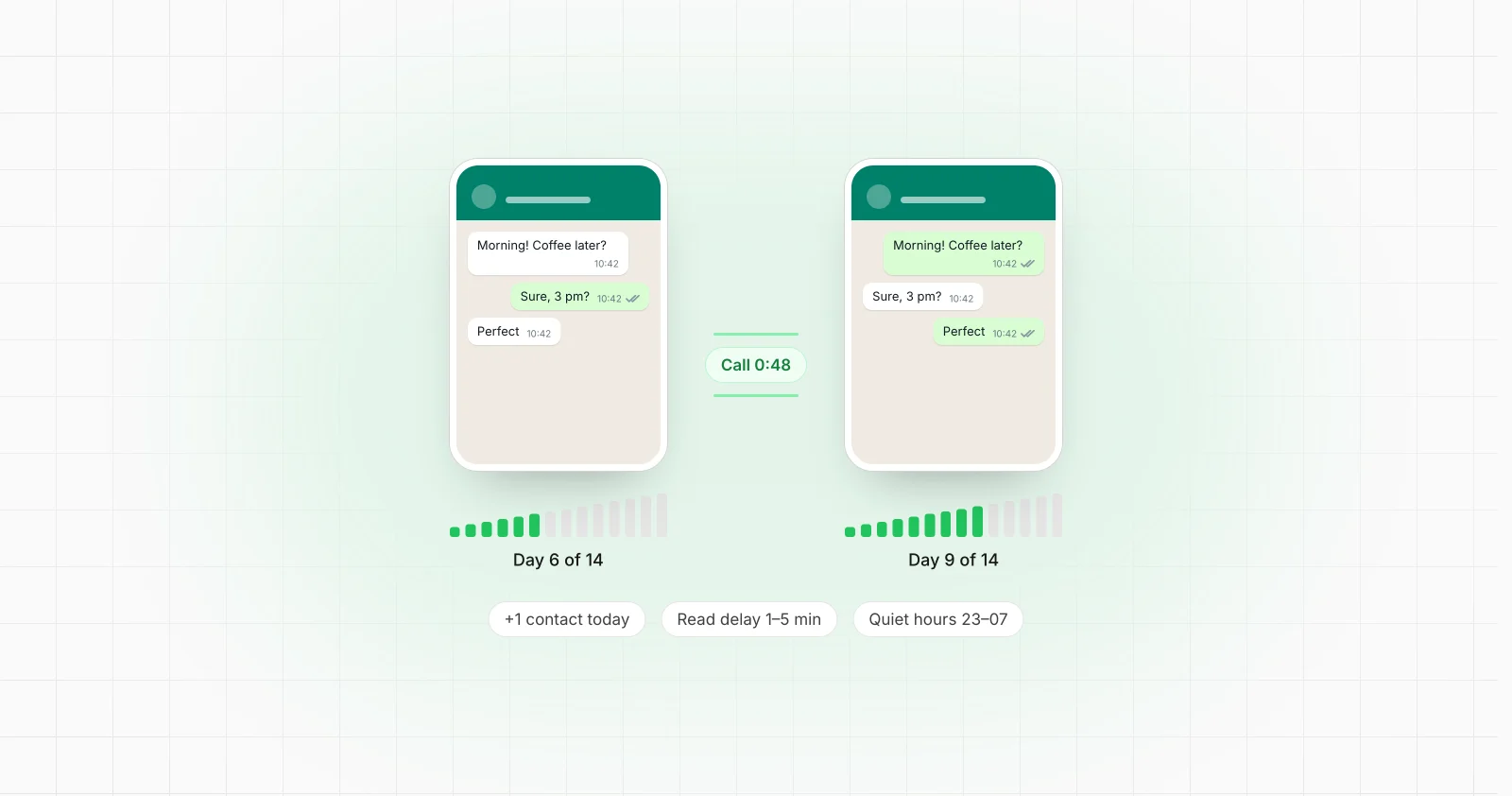
Platforms do not like automation in their consumer apps, and their terms generally limit it whatever the purpose. A phone farm running real work can still lose accounts if it behaves unlike a person, which is why farms warm accounts up slowly and keep one account per phone.
Click farms are a different priority. Fake engagement is what platforms' integrity teams are built to remove: inflated follower counts are purged, fake reviews deleted, fraudulent ad clicks refunded to advertisers. Accounts that produce fake engagement tend to be removed in waves, together with what they produced.
Where the law comes in
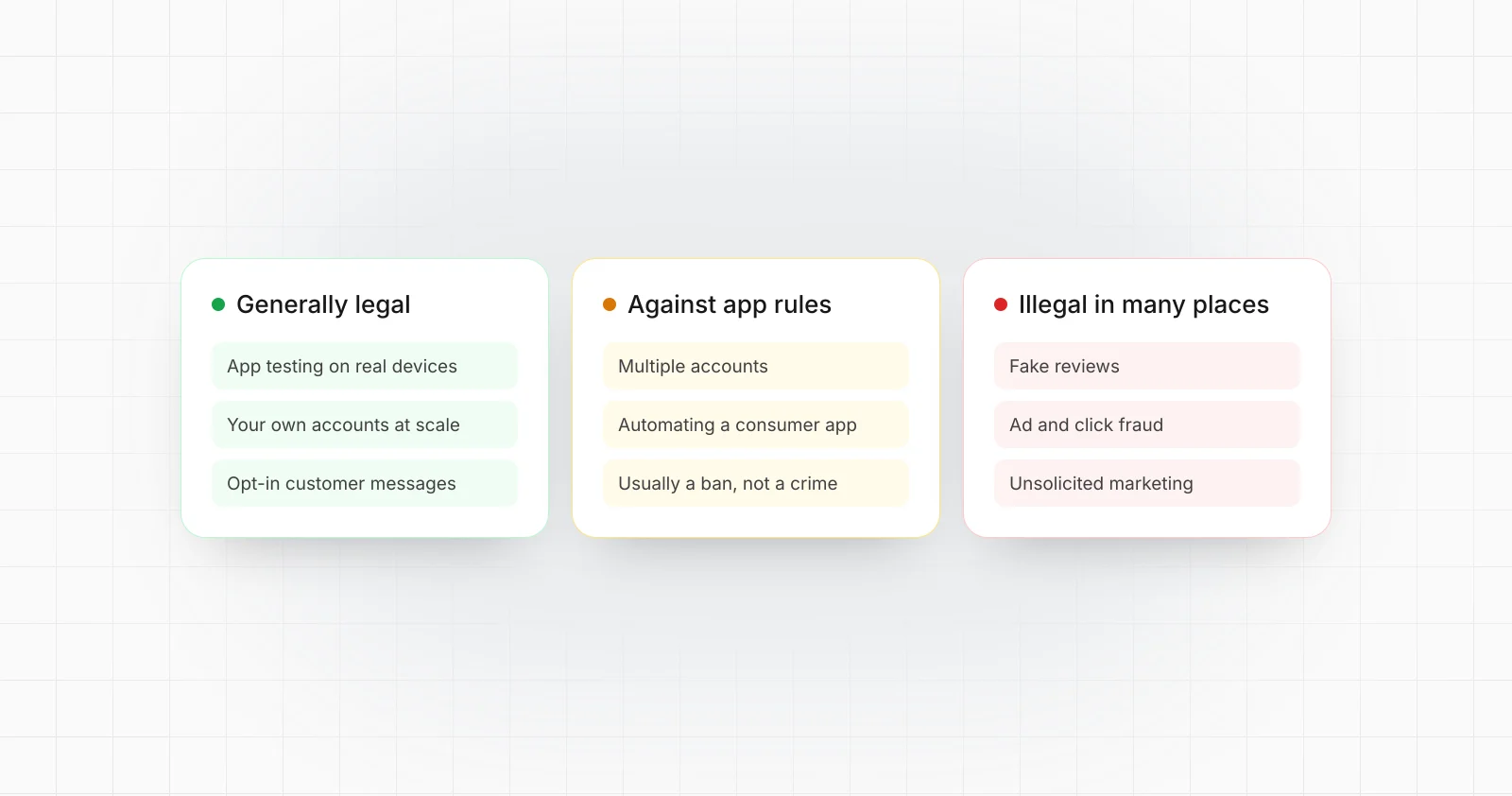
Running many phones is not illegal. Producing fake engagement often is. In the United States, the FTC's rule on fake reviews, in force since October 2024, covers fake reviews and also the sale and purchase of fake indicators of social media influence, such as bot-generated followers or views used for a commercial purpose. The EU and the UK ban fake reviews under consumer law, and ad fraud is prosecuted as fraud in many countries.
The full overview, with what is generally fine and what is not, is in are phone farms legal?. It is a general guide, not legal advice.
If you are buying, not building
If you are looking for someone to run phones for you, a few signs that an offer is really a click farm service:
- It sells numbers, such as followers, views, ratings or installs, rather than work done in your own accounts.
- It promises results that do not depend on anything real, such as guaranteed likes per post.
- It provides the accounts, often in bulk, instead of running yours.
- It is vague about how the activity is produced.
A phone farm provider talks about your accounts, your phones, what each phone does every day and what happens when an app updates.
Where MationX fits
MationX builds and runs phone farm automation on your own phones or cloud phones: warm-up, daily activity in your own accounts, and sending from your backend, kept working when the apps update. The app that does the work on each phone is the MationX Client. We do not build fake reviews or anything that is plainly fraud. If you want to know whether what you have in mind fits, describe it and you get a straight answer within a day.
Common questions
Is a phone farm a click farm? Not necessarily. A phone farm is many phones run by software. It becomes a click farm when what it produces is fake engagement.
Why do news stories call them the same thing? Because the photos look the same: walls of phones with screens lit up. The difference is in what the phones are doing, which a photo does not show.
Are click farms illegal? Often, depending on what they produce and where. Fake reviews are banned in the US, the EU and the UK, the FTC rule also covers buying and selling fake social media influence, and ad fraud is prosecuted as fraud.
Can a phone farm be used for marketing without being a click farm? Yes. Running your own accounts, posting your own content on a schedule and answering the people who write to you is marketing. Selling or buying engagement that did not come from real interest is what makes it a click farm.