Running accounts6 min read
Are Phone Farms Legal? What Is Allowed and What Is Not
Written by Petr Kynčl
Owning a room full of phones and having software operate them is not illegal in itself. A phone farm is hardware and automation, the same ingredients as a device lab at an app company. Whether a particular farm is legal depends on what it does, where it does it and whose accounts and numbers it uses.
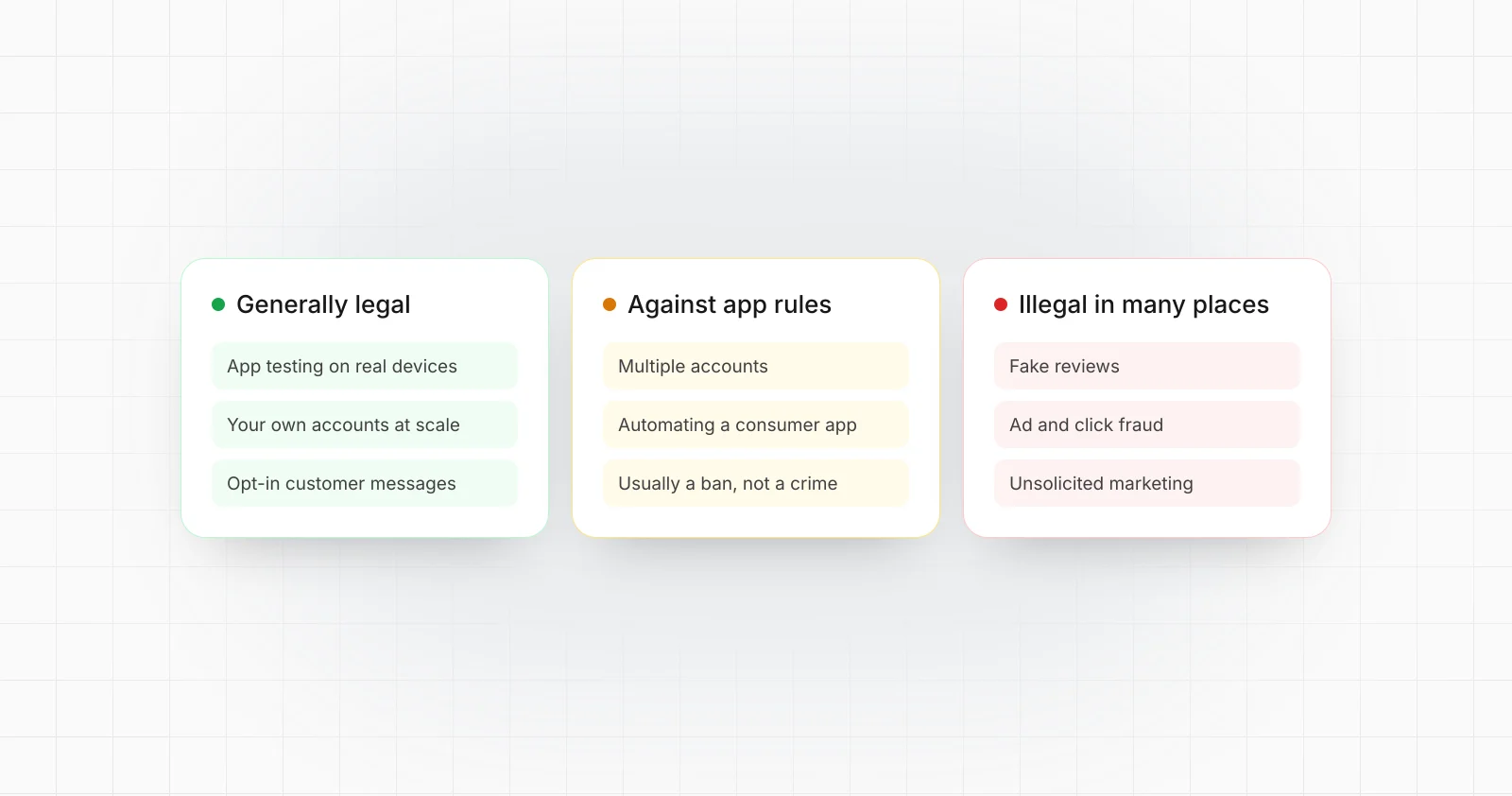
This guide sorts the common uses into three groups: what is generally legal, what breaks a platform's rules without breaking the law, and what is illegal in many places. It is a general overview, not legal advice. Laws differ by country and change, so check with a lawyer for anything that matters to your business.
The short answer
- The farm itself: legal. Buying phones, SIMs and proxies and automating apps on them is not a crime in itself in most countries.
- Breaking an app's terms: usually a contract matter. The platform can close your accounts, and in some cases sue, but it is not normally a crime on its own.
- Deceiving people or breaking specific laws: illegal in many places. Fake reviews, fake engagement sold to mislead, ad fraud, unsolicited marketing messages and SIM registration fraud are where the legal risk sits.
Uses that are generally legal
Most real phone farm work falls here:
- App testing and QA on real devices, which is what XCUITest and UI Automator were built for and what every device lab does.
- Running your own accounts at scale, such as a business managing many of its own profiles or brand accounts on one schedule.
- Customer messaging with consent: order updates, appointment reminders, replies to people who wrote to you first.
- Turning an app with no API into an endpoint for your own systems, for example a payments or logistics app your business already uses. See how to automate an Android app without an API.
- Monitoring and research: checking how ads, prices or listings appear on real phones in different places.
Legal does not mean every platform welcomes it. Which brings us to the middle group.
Against platform rules, but not usually a crime
Most apps' terms of service limit automation and multiple accounts. WhatsApp's terms restrict automated and bulk messaging through its consumer apps. Instagram and TikTok limit automated activity and inauthentic behaviour.
Breaking those terms is mainly a matter between you and the platform. The usual consequence is that accounts are restricted or banned, and in some cases the platform can bring a civil claim. It is generally not a crime by itself. In the United States, for example, the Supreme Court's 2021 decision in Van Buren v. United States narrowed the federal computer misuse law, and breaching a site's terms is generally not, by itself, treated as unauthorised access.
That still makes terms worth reading: they decide how long your accounts survive, and a farm that loses its accounts every week is not a business. It is also why the official routes exist, such as the WhatsApp Business Platform for business messaging at scale, covered in the complete guide to WhatsApp automation.
Uses that are illegal in many places
This is where phone farms get into the news, and where the law, not just the platform, is involved.
Fake reviews and testimonials. Writing or buying reviews from people who never used the product is banned in more and more places. In the United States, the FTC's rule on fake reviews and testimonials took effect on 21 October 2024 and allows civil penalties for knowing violations. In the EU, fake reviews are a banned commercial practice under consumer law updated in 2022, and the UK banned them under its Digital Markets, Competition and Consumers Act from April 2025.
Fake engagement sold to mislead. The same FTC rule also prohibits selling or buying fake indicators of social media influence, such as followers or views generated by bots or hijacked accounts, when they are used to misrepresent influence for a commercial purpose. Engagement farms that sell followers or views to brands sit squarely in this area.
Ad fraud and click fraud. Phones that click ads or watch them to drain an advertiser's budget or inflate a publisher's earnings are committing fraud, and it is prosecuted as such.
Unsolicited marketing messages. Many countries regulate marketing texts, calls and messages. In the United States, the TCPA restricts automated marketing calls and texts without consent. In Europe and the UK, privacy and electronic communications rules require consent for most marketing messages. Bulk messaging to bought lists can be illegal regardless of the channel.
SIM and identity fraud. Many countries require SIM cards to be registered to a real person. Registering SIMs with false or borrowed identities, or buying pre-registered SIMs in other people's names, breaks those laws.
Impersonation and manipulation. Accounts that pretend to be real people or organisations, or coordinated fake activity around elections, can break laws on fraud, impersonation and election integrity, depending on the country.
How to keep a farm on the right side
A few questions sort most cases:
- Are the accounts yours, created and registered honestly, with SIMs registered the way local law requires?
- Would the people on the other end expect this? Messages to customers who asked for them, replies to people who wrote first.
- Is anyone being misled about who is behind an account, a review or a number?
- Is anyone being charged for activity that did not really happen, such as ad clicks or views?
- Have you read the terms of the apps you automate, and decided you can live with the consequences of breaking them?
If the answers to 3 and 4 are no, a farm is very unlikely to be the legal problem. If they are yes, no amount of technique fixes that.
Where MationX stands
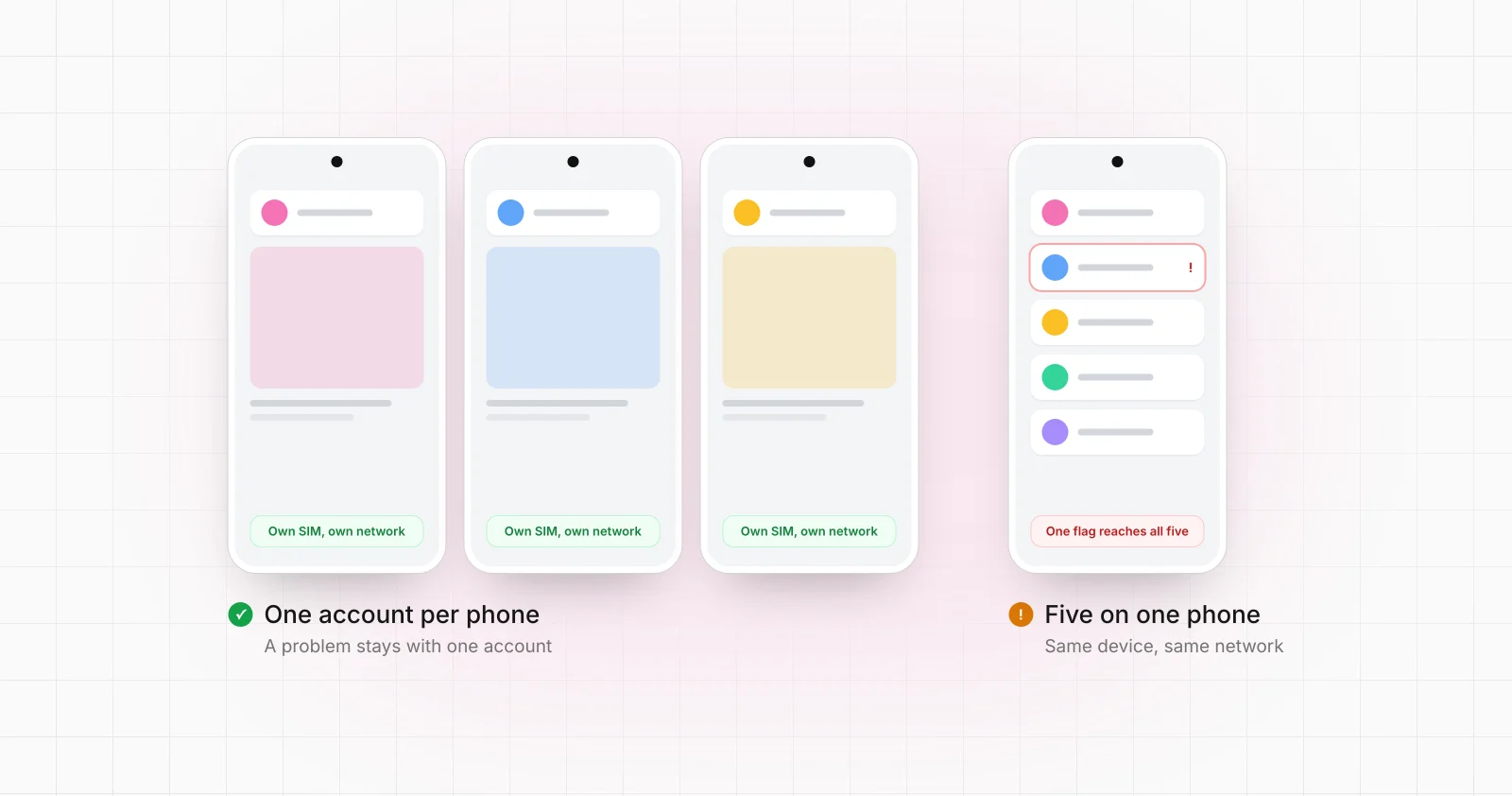
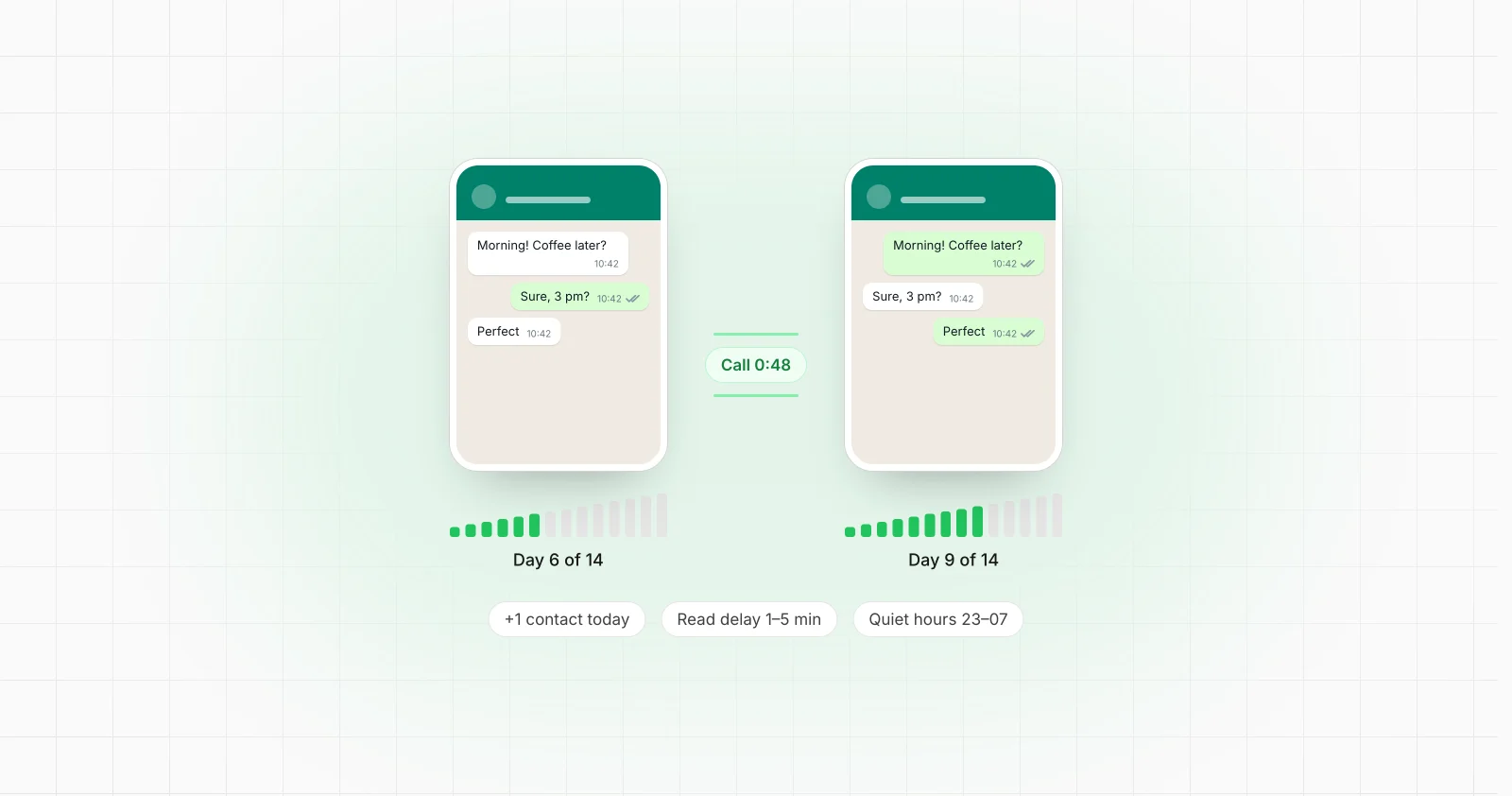
MationX builds and runs automation on Android phones: phone farm automation, custom automation for one app, and the MationX Client that does the work on each phone. We do not build fake reviews or anything that is plainly fraud, and we will tell you if a request is heading somewhere the law, not just a platform, has an opinion. For the practical side of running accounts, see how many accounts per phone and how to warm up a WhatsApp number.
Common questions
Is it illegal to own a phone farm? No. Owning many phones and automating them is legal in most countries. What the farm is used for decides whether a law is broken.
Is it illegal to have multiple accounts? Usually not. Many platforms limit multiple accounts in their terms, so they can close them, but having them is not a crime in itself. Using them to deceive people can be.
Can I go to jail for running a phone farm? For running the farm, no. For using it to commit fraud, such as ad fraud, fake reviews or identity fraud, people have been prosecuted.
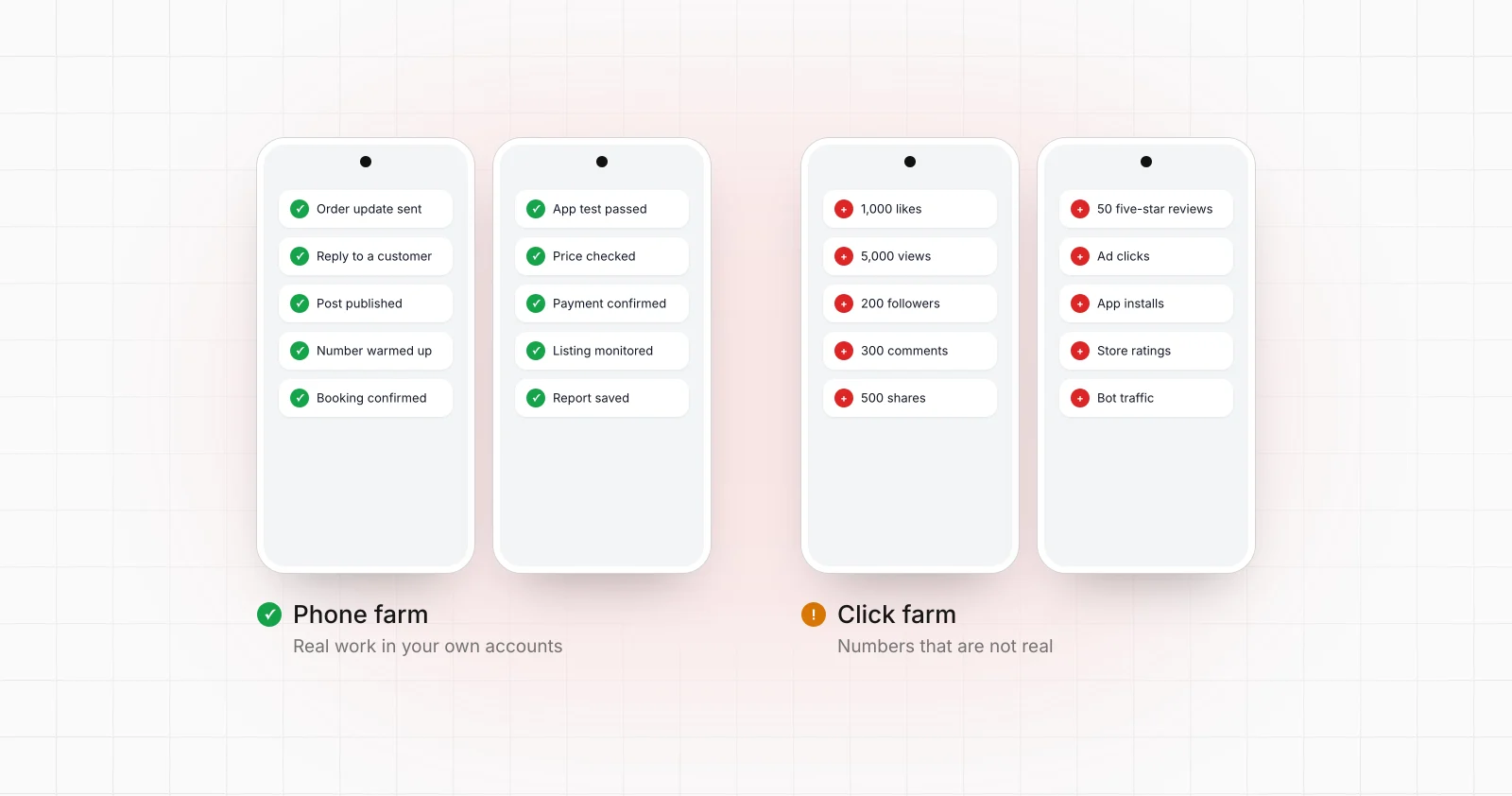
Are click farms and phone farms the same thing? No. A phone farm is the setup: many phones operated by software. A click farm is one particular use of it, producing fake clicks, views or engagement, and that use is what carries the legal risk.
Is this legal advice? No. It is a general overview. Laws vary by country and change, so ask a lawyer about your specific case.